How to attract Mickey Mouse units the stage for this enthralling narrative, providing readers a glimpse right into a story that’s wealthy intimately with step-by-step directions and brimming with originality from the outset. This participating narrative not solely delves into the world of the beloved cartoon character but additionally gives an in-depth take a look at the method of making a recognizable and iconic determine.
The journey begins with understanding Mickey Mouse’s iconic silhouette and composition. We’ll discover the significance of his ears in facial recognition, how artists can exaggerate his ears to create comical results, and the way the character’s design has been tailored in several artwork types through the years. This will likely be adopted by a breakdown of his facial options and exaggeration strategies, the place we are going to simplify his facial construction into fundamental shapes, analyze the affect of his cheerful grin on the character’s enchantment, and focus on how artists can create depth and quantity utilizing varied shading and lighting strategies.
Mickey Mouse’s Iconic Silhouette and Composition
Mickey Mouse is likely one of the most recognizable cartoon characters on the earth, with a silhouette that has been iconic for over 9 a long time. On the coronary heart of his enduring recognition is his distinctive form and composition, significantly his ears. These outsized, rounded ears have turn into synonymous with the character, making him immediately recognizable throughout varied artwork kinds and cultures.
The ears are essential in Mickey’s facial recognition, and their significance can’t be overstated. They supply a transparent distinction between Mickey and different cartoon characters, setting him aside within the realm of animation. The massive, rounded ears additionally function a visible anchor, drawing the viewer’s consideration to Mickey’s face and emphasizing his pleasant, approachable persona.
Exaggerating Mickey’s Ears for Comical Results
Artists typically use exaggeration to create comical results of their illustrations. In the case of Mickey’s ears, artists can use varied strategies to magnify their measurement and form whereas sustaining the character’s iconic look. As an illustration, they may elongate the ears to make Mickey look goofy or cartoonish, or they may flatten them to convey a extra severe and even melancholic tone.
Listed here are just a few examples of how artists can exaggerate Mickey’s ears to create comical results:
* Think about Mickey with ears which are even bigger and extra rounded, giving him a comical, cartoonish look. On this illustration, Mickey’s ears are elongated and rounded, making him seem like a lovable, bumbling clown.
* In one other illustration, Mickey’s ears are flattened, giving him a extra severe and even unhappy look. This visible change can convey a spread of feelings, from disappointment to unhappiness.
* One other instance options Mickey with ears which are formed like rabbit ears, full with lengthy, floppy ideas. This comical alteration could make Mickey seem like a lovable, goofy character, splendid for a youngsters’s cartoon or youngsters’s e book.
Evaluating Authentic and Tailored Artwork Kinds
Mickey Mouse has undergone quite a few variations in several artwork types through the years, from conventional animation to digital artwork. Regardless of these variations, the core parts of Mickey’s design have remained constant, significantly his iconic ears.
Here is a comparability between Walt Disney’s unique design in 1928 and subsequent variations in several artwork types:
* Authentic Design (1928): Walt Disney’s unique design options Mickey with massive, rounded ears which are proportional to his face. This design has turn into iconic, and it stays a staple of the character’s look.
* Digital Artwork (2000s): In digital artwork, Mickey’s ears are sometimes exaggerated for comical impact or to emphasise his expressive persona. These digital illustrations typically characteristic Mickey with outsized ears, full with vivid colours and dynamic poses.
* Japanese Cartoon Model (Nineteen Eighties): In a Japanese cartoon model, Mickey’s ears are sometimes flattened, giving him a extra severe and even melancholic look. This design variation can convey a spread of feelings, from disappointment to unhappiness.
* Manga Model (2010s): In a manga model, Mickey’s ears may be elongated or flattened to create a way of drama or stress. This design variation can be utilized to convey highly effective feelings or to create a way of visible stress.
These comparisons spotlight the pliability of Mickey’s design, which may be tailored to swimsuit varied artwork types whereas sustaining the character’s iconic silhouette and composition.
Breaking Down Mickey Mouse’s Facial Options and Exaggeration Methods
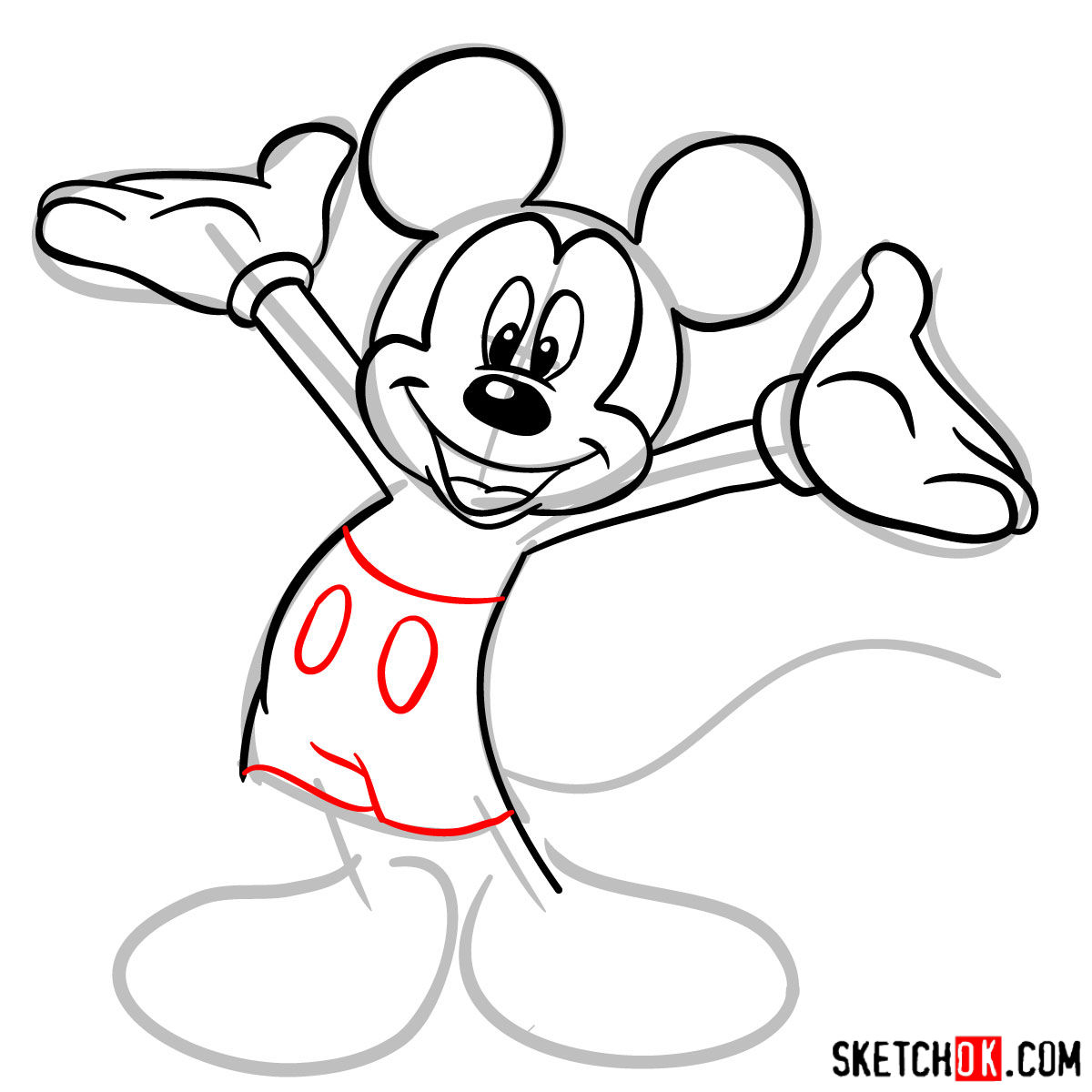
Mickey Mouse’s signature smile and expressive face have captured the hearts of individuals worldwide. To attract Mickey Mouse’s iconic facial options, it is important to interrupt down his face into fundamental shapes and apply exaggeration strategies to create a memorable and recognizable character.
Breaking down Mickey’s face into geometric kinds may be achieved through the use of easy shapes similar to circles, ovals, and triangles. For instance, his eyes may be drawn as two small circles with pupils on the middle, whereas his nostril may be represented as a small triangle. By utilizing these fundamental shapes, artists can create a simplified but recognizable illustration of Mickey’s face.
Mickey’s facial features is characterised by his cheerful grin, which is commonly accompanied by a slight upturn of his lips and a glint in his eye. This iconic smile was impressed by Walt Disney’s personal smile and has turn into an integral a part of Mickey’s appeal. In comparison with different cartoon characters of the identical period, Mickey’s facial features stands out for its simplicity and innocence, making him an immediately recognizable and lovable character.
Utilizing Fundamental Shapes to Create Facial Options, How to attract mickey mouse
- The eyes may be drawn as two small circles with pupils on the middle. The form of the eyes can range relying on the expression, however in a impartial face, they’re sometimes rounded.
- The nostril may be represented as a small triangle, typically with a slight upturn on the tip. This provides Mickey’s face a barely rosy and cheerful look.
- The mouth is commonly depicted as a curved line, with the ends turned barely upwards to kind Mickey’s signature smile.
- The eyebrows may be drawn as easy traces or shapes, typically with a slight arch to present Mickey a smart and alert expression.
By utilizing these fundamental shapes, artists can create a simplified and recognizable illustration of Mickey’s face, which may be custom-made to convey completely different feelings and expressions.
Using Shading and Lighting Methods
Mickey’s face may be enhanced by making use of varied shading and lighting strategies to create depth and quantity. By various the quantity and path of sunshine, artists can create a spread of various results, from gentle, delicate shadows to dramatic highlights.
- Mushy, delicate shading can be utilized to create a delicate, romantic ambiance, whereas tougher, extra dramatic shading can be utilized to create a extra intense or dramatic impact.
- Highlighting sure areas of Mickey’s face, similar to his eyes or nostril, can create a extra nuanced and expressive illustration of his feelings.
- Various the path of sunshine can create a spread of various results, from a gentle, overhead mild to a dramatic, side-lit impact.
By using these shading and lighting strategies, artists can create a extra detailed and interesting illustration of Mickey’s face, which can be utilized to convey a spread of various feelings and expressions.
Various Shading to Create Depth and Quantity
Mickey’s face may also be enhanced by various the quantity and path of shading to create a way of depth and quantity. By making use of completely different shading strategies to completely different areas of his face, artists can create a extra nuanced and lifelike illustration of his options.
| Space | Shading Technique | Impact |
|---|---|---|
| Eyes | Delicate gradient shading | Creates a way of softness and gentleness |
| Nostril and mouth | Darker, extra dramatic shading | Creates a way of definition and focus |
| Cheeks | Soffer, extra mild shading | Creates a way of softness and quantity |
By various the quantity and path of shading to create depth and quantity, artists can create a extra detailed and interesting illustration of Mickey’s face, which can be utilized to convey a spread of various feelings and expressions.
The Energy of Mickey’s Smile
Mickey’s iconic smile has turn into an integral a part of his appeal and enchantment. It is a easy but expressive characteristic that has captured the hearts of individuals worldwide.
| Traits | Impression |
|---|---|
| Easy and harmless | Creates a way of approachability and friendliness |
| Expressive and diversified | Conveys a spread of various feelings and expressions |
| Iconic and recognizable | Immediately recognizable and memorable |
By utilizing these traits to create a memorable and expressive smile, artists can seize the essence of Mickey’s appeal and enchantment, making him an immediately recognizable and lovable character.
Crafting the Backgrounds and Environments for Mickey Mouse Scenes
In the case of creating participating and immersive Mickey Mouse scenes, the backgrounds and environments play a vital function in setting the temper and ambiance. Establishing a constant shade palette and visible model is crucial in making a cohesive look that resonates with audiences of all ages.
A constant shade palette helps to create a way of continuity and circulation all through the scene. By choosing a restricted shade vary, artists can concentrate on creating a singular visible identification that units the tone for the story. As an illustration, a muted shade palette with predominantly blues and grays can evoke a way of calmness and serenity, whereas a vivid and daring palette can create a way of pleasure and vitality.
The colour decisions can even evoke completely different feelings and moods, which is essential in storytelling. Heat colours like oranges and reds can create a way of heat and coziness, whereas cool colours like greens and blues can create a way of calmness and rest. By rigorously choosing the colours used within the backgrounds, artists can set the tone for the story and affect the viewers’s emotional response.
Atmospheric Perspective and Layering
To create dynamic and interesting backgrounds, artists use varied strategies, one in all which is atmospheric perspective. This includes manipulating the colours and tones of objects within the background to create a way of distance and depth. By desaturating colours and lowering distinction, artists can create a way of softness and blurriness, suggesting that the item is much away.
Layering is one other approach used to create depth and curiosity in backgrounds. By layering completely different parts, similar to buildings, bushes, or clouds, artists can create a way of complexity and texture. Every layer may be handled with a singular model and lighting impact to create visible curiosity and separate it from different layers.
Stability of Characters and Environments
In the case of balancing characters and environments, artists should rigorously take into account the connection between the 2. A well-balanced composition is crucial to create a way of concord and cohesion, which is essential in storytelling. By contemplating the location, measurement, and place of characters in relation to the surroundings, artists can create a visually interesting and interesting scene.
As an illustration, the scale of the characters in relation to the surroundings can create a way of scale and proportion. By making the characters bigger or extra distinguished, artists can create a way of significance and emphasize their function within the story. Conversely, by making the characters smaller or extra delicate, artists can create a way of humility and emphasize the surroundings’s function within the story.
Artwork Model Comparability
All through the historical past of Mickey Mouse, varied artwork types have been utilized in shorts and options. The affect of fashion on the general storytelling and aesthetic is important, influencing the viewers’s notion and emotional response. As an illustration, the early Mickey Mouse shorts had been characterised by a easy, but distinctive visible model, which helped to ascertain the character’s identification. This model featured daring traces, vivid colours, and a particular character design.
The usage of completely different artwork types has additionally been employed to convey particular themes or moods. As an illustration, the characteristic movie “Fantasia” (1940) featured a spread of artwork types, from classical to summary, to create a way of marvel and magic. Equally, the characteristic movie “The Jungle Ebook” (1967) used an intricate and detailed artwork model to create a way of journey and hazard.
Conclusive Ideas: How To Draw Mickey Mouse
Mickey Mouse is an unforgettable character that has captured the hearts of individuals all over the world. By mastering the strategies Artikeld on this participating narrative, it is possible for you to to create your personal iconic model of Mickey Mouse, wealthy intimately and brimming with persona. Bear in mind, observe makes good, so take your time and have enjoyable bringing this beloved character to life.
Important Questionnaire
What’s the finest device to make use of for drawing Mickey Mouse?
The perfect device to make use of for drawing Mickey Mouse will depend on private desire. Some artists desire conventional drawing instruments similar to pencils and markers, whereas others desire digital instruments like Adobe Illustrator.
How do I get began with drawing Mickey Mouse?
To get began with drawing Mickey Mouse, start by breaking down his iconic silhouette and composition. Perceive the significance of his ears, facial options, and physique language, and observe drawing these parts individually earlier than combining them into an entire picture.
Can I draw Mickey Mouse with out being an skilled artist?
Anybody can draw Mickey Mouse, no matter their degree of creative expertise. With a bit endurance and observe, you’ll be able to grasp the strategies Artikeld on this narrative and create your personal iconic model of the beloved character.

