As how to attract a wolf takes heart stage, this opening passage beckons readers right into a world of creativity and self-expression, the place the boundaries of creative prospects are pushed to the restrict. Whether or not you are an artwork fanatic or a seasoned artist, this information is designed to empower you with the talents and data wanted to convey your wolf drawing goals to life.
The artwork of drawing a wolf goes past mere technical abilities; it requires an understanding of the animal’s anatomy, conduct, and habitat. By mastering these important elements, you can seize the essence of the wolf and infuse your drawings with emotion, character, and depth.
Creating Texture and Patterns in Wolf Fur
When drawing a wolf, the feel and sample of its fur are essential parts that may make or break the realism of your art work. A wolf’s fur is not only a easy, uniform layer; it is a advanced, layered system of thick coats, brief undercoats, and guard hairs that create a singular texture and sample.
Simulating Wolf Fur Texture
To create a practical wolf fur texture, you may must make use of varied strategies, together with mixing stumps, hatching, and cross-hatching. These strategies will provide help to obtain layered, dimensional fur textures that seize the intricacies of a wolf’s coat.
Mixing stumps are vital instrument for creating clean, blended edges and transitions between completely different fur textures. When utilizing mixing stumps, keep in mind to use light stress and mix the stumps in a clean, even movement. This may provide help to obtain a pure, mushy texture that is attribute of a wolf’s fur.
For instance, the again of a wolf’s fur typically encompasses a thicker, longer coat to guard it from the weather. To create this texture, use a mixing stump to melt the perimeters of particular person hairs and mix them collectively. This may give your wolf a thick, luxurious coat that is excellent for its rugged, wild way of life.
Hatching and cross-hatching are additionally important strategies for creating detailed, textured fur. When hatching, apply a collection of evenly spaced strains to create a textured floor. For cross-hatching, layer a number of hatching strains at completely different angles to create a deeper, extra dimensional texture.
As an example, the undercoat of a wolf’s fur is usually shorter and softer than the guard hairs. To create this texture, use a lighter hatching line to counsel the brief, advantageous hairs. Then, use a collection of cross-hatching strains to create a softer, extra layered texture.
Lighting and Shading Strategies for Drawing Wolves in Totally different Environments
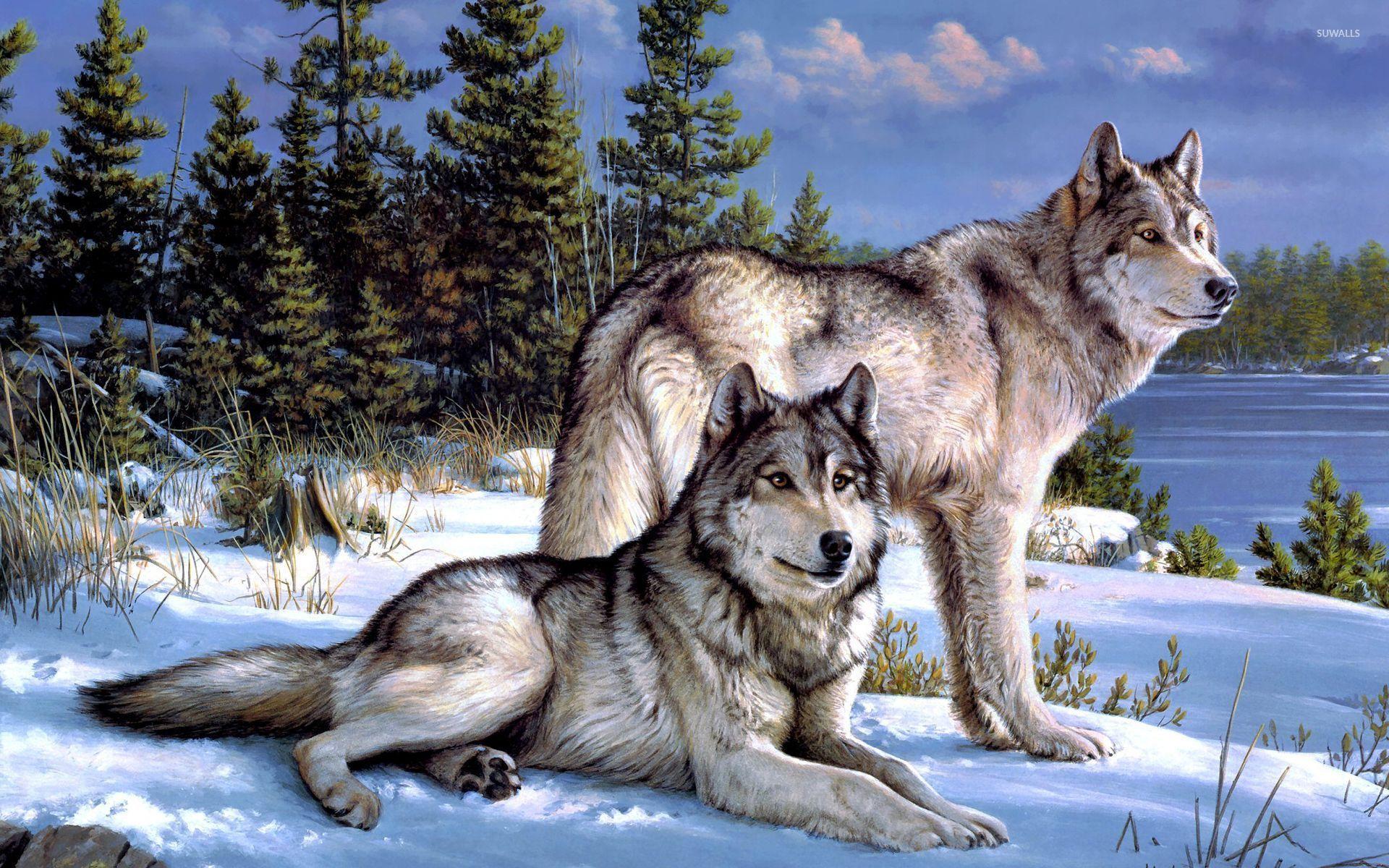
Drawing wolves in varied settings requires an understanding of lighting and shading strategies to seize the nuances of their fur and environment. By mastering these abilities, you can create extra real looking and fascinating art work.
Important Lighting Concerns, How to attract a wolf
When drawing wolves in numerous environments, it is essential to think about the kind of lighting and the way it impacts the scene. Listed here are some important lighting issues to remember:
- Moonlight: Delicate, light mild that casts a silver glow on the wolf’s fur and environment. To seize this impact, use light, swirling brushstrokes to mix colours and create a mushy edge.
- Forest dappled mild: Filtered mild that casts intricate patterns on the wolf’s fur and the forest flooring. To depict this impact, use brief, damaged brushstrokes to counsel the filtered mild and create texture.
- Arctic twilight: A mushy, blue-gray mild that casts an ethereal glow on the wolf’s fur and environment. To seize this impact, use mushy, sweeping brushstrokes to mix colours and create a refined edge.
- Excessive-contrast conditions: Dramatic lighting that creates deep shadows and intense highlights. To depict this impact, use daring, darkish brushstrokes to create deep shadows and white highlights to counsel the extraordinary mild.
Lighting Sorts and Shading Strategies
This is a breakdown of the lighting varieties and shading strategies to make use of for every setting:
| Lighting Sorts | Important Shading Strategies | Suggestions for Capturing Delicate, Mild Mild | |
|---|---|---|---|
| Moonlight | Delicate, sweeping brushstrokes, light mixing | Use a small brush to create mushy, feathery strokes, suggesting the light mild | Use a big brush to create daring, darkish strokes, suggesting deep shadows |
| Forest dappled mild | Damaged, brief brushstrokes, textured floor | Use a small brush to create damaged, brief strokes, suggesting the filtered mild | Use a big brush to create daring, darkish strokes, suggesting deep shadows |
| Arctic twilight | Delicate, sweeping brushstrokes, refined edge | Use a small brush to create mushy, sweeping strokes, suggesting the light mild | Use a big brush to create daring, darkish strokes, suggesting deep shadows |
| Excessive-contrast conditions | Daring, darkish brushstrokes, white highlights | Use a big brush to create daring, darkish strokes, suggesting deep shadows | Use a small brush to create white highlights, suggesting intense mild |
Mastering Lighting and Shading Strategies
To grasp lighting and shading strategies, follow, follow, follow! Experiment with completely different brushstrokes, colours, and surfaces to create a variety of lighting results. Observe the world round you, learning the methods during which mild interacts with completely different surfaces and objects. With time and follow, you may develop the talents to seize the subtleties of lighting and shading in your art work.
Conclusion: How To Draw A Wolf
With the talents and strategies you’ve got discovered on this information, you may be properly in your solution to creating beautiful wolf drawings that showcase your distinctive perspective and creative aptitude. Bear in mind, follow makes excellent, so do not be afraid to experiment and take a look at new issues – in any case, that is what makes art-making so thrilling!
FAQ Insights
What are the important strains and shapes for drawing a wolf?
A wolf’s physique consists of elementary strains, curves, and shapes, together with the torso, legs, and snout. To attract a wolf, begin by breaking down these fundamental kinds into less complicated ones after which construct them up once more utilizing tips and gesture drawing.
How do I create textured fur on my wolf drawing?
To imitate the numerous textures of a wolf’s fur, use mixing stumps, hatching, and cross-hatching strategies. Begin by sketching the fundamental form of the fur, after which construct up layers of texture utilizing completely different shading and hatching patterns.
What are some widespread lighting issues for drawing wolves?
When drawing wolves in numerous environments, think about elements comparable to moonlight, forest dappled mild, and Arctic twilight. Use mushy, light mild to create refined shadows, and dramatic, high-contrast conditions to seize the depth of the wolf’s feelings.
How do I seize the right proportions and construction of a wolf’s face?
To attract a wolf’s face precisely, research the proportions and construction of the animal’s cranium. Take note of the location and form of the eyes, nostril, and mouth, and use light, clean strains to seize the subtleties of the wolf’s facial expressions.

