Delving into how to attract a pig, this introduction immerses readers in a singular and compelling narrative. As we discover the fascinating world of pig drawing, we’ll cowl the important methods and tricks to create a wide ranging piece of artwork.
From understanding the basic shapes and proportions of a pig’s physique to capturing its pleasant facial expressions and lovely physique language, we’ll information you thru the method with ease. Whether or not you are a seasoned artist or a newbie, our complete information will make it easier to unlock your creativity and produce a pig to life on the canvas.
The Fundamentals of Drawing a Life like Pig
To create a sensible pig drawing, accuracy in capturing its type is essential. The pig’s physique has a particular form, with a compact torso, quick neck, and highly effective legs. On this part, we’ll break down the essential shapes and proportions of a pig’s physique, focus on the kinds of traces used, and canopy shading and texture methods so as to add depth and dimension.
Fundamental Shapes and Proportions
The pig’s physique may be damaged down into a number of primary shapes: cylinders, spheres, and rectangles. This is a desk summarizing the proportions:
| Physique Half | Top (cm) | Width (cm) | Size (cm) |
|---|---|---|---|
| Torso | 20-25 | 10-12 | 15-18 |
| Head | 6-8 | 8-10 | 10-12 |
| Neck | 5-6 | 4-5 | 8-10 |
| Legs | Varies | 8-10 | 12-15 |
Be aware that these proportions can range relying on the breed and measurement of the pig.
Forms of Traces
When drawing a pig, you will use various kinds of traces to create depth and dimension. Listed here are the important thing traces to give attention to:
- Contours: These are the outer edges of the pig’s physique, used to outline its general form.
- Tips: These are mild traces used that will help you place options just like the eyes, nostril, and mouth.
- Worth traces: These are darker traces used to create shading and point out type.
- Texture traces: These are quick, irregular traces used to recommend the feel of the pig’s pores and skin.
To create a 3D impact, range the thickness, course, and texture of those traces.
Shading and Texture
So as to add depth and dimension to your pig drawing, you will have to create a way of quantity and texture. Listed here are some primary shading and texture methods:
- Atmospheric perspective: Use lighter values for distant options and darker values for nearer options to create a way of depth.
- Cross-hatching: Use overlapping traces to create a spread of values and recommend texture.
- Stippling: Use small dots to create a textured, virtually three-dimensional impact.
Keep in mind to watch the pure texture of the pig’s pores and skin and use these traits to tell your shading and texture selections.
Particular person Physique Elements
When drawing a pig, it is important to get the person physique elements right. Listed here are some suggestions for drawing totally different options:
- Ears: Draw the ears as triangular shapes, with the bottom dealing with the top and the tip pointing outward.
- Nostril: Draw the nostril as a small triangle, with the bottom dealing with the snout and the tip pointing upward.
- Tail: Draw the tail as an extended, tapering form, with the top dealing with downward.
When combining these particular person options, ensure to concentrate to their proportions and placement on the physique.
Designing Distinctive Facial Options
Drawing a sensible pig’s face requires consideration to element and understanding of its distinctive traits. Pigs have a particular facial construction, with a brief snout, small ears, and expressive eyes. To seize these options precisely, we have to study the place and form of the eyes, nostrils, and mouth, and learn to create a spread of expressions.
The pig’s face is a key side of its general attraction and character. By mastering the design of its facial options, you’ll be able to deliver your drawings to life and create a sensible, participating illustration of this lovable animal.
Place and Form of Eyes
Pigs have massive, spherical eyes which might be comparatively shut collectively, giving them a candy and endearing expression. To attract the eyes appropriately, begin by sketching two small circles, ensuring they’re aligned with the general form of the face. The eyes needs to be positioned barely extra in direction of the nostril than the width of the face. The form of the eyes needs to be rounded, with a slight tilt upwards on the outer nook. Add the eyelids by drawing a slight curve on the prime of every eye, ensuring to maintain it refined and gentle.
Nostrils and Mouth
The nostrils are situated on both aspect of the nostril, barely above the mouth. To attract the nostrils, begin by sketching two small oval shapes. Ensure they’re positioned evenly and near the nostril. The mouth of a pig is small and pursed, with a slight upwards curve on the corners. To attract the mouth, begin by sketching a small curved line, ensuring it’s not too deep.
Vary of Expressions
A pig’s face can convey a variety of feelings, from joyful and playful to unhappy and delicate. To seize these expressions, experiment with totally different combos of facial options. For instance, a contented pig might need its eyes huge open, with the corners of its mouth barely upturned. A tragic pig might need its eyes droopy, with the corners of its mouth turned down.
Listed here are some widespread facial expressions of a pig, together with their corresponding emotional descriptions:
- Comfortable:
- Large open eyes
- Smiling mouth
- Relaxed posture
A contented pig is usually seen with its ears flapping and its tail wagging. Its eyes are brilliant and alert, and its mouth is barely upturned.
- Unhappy:
- Poised ears
- Droopy eyes
- Turned-down mouth
A tragic pig is usually seen with its ears folded and its tail tucked in.
- Playful:
- Large open eyes
- Alert posture
- Flapping ears
A playful pig is usually seen with its ears flapping and its tail wagging.
- Light:
- Subdued ears
- Barely closed eyes
- Gentle mouth
A delicate pig is usually seen with its ears barely folded and its eyes partially closed.
Capturing Texture and Motion of Ears
A pig’s ears are one in all its most distinctive options, and capturing their texture and motion is essential for creating a sensible illustration of the animal. To attract the ears, begin by sketching two small triangular shapes on both aspect of the top. Ensure they’re comparatively small and rounded on the suggestions. Add texture to the ears by creating quick, curved traces that observe the form of the ear. Experiment with totally different angles and positions to seize the motion and suppleness of the ears.
Function of Ears in Speaking Feelings
A pig’s ears play a big function in speaking its feelings and intentions. When a pig is joyful or playful, its ears are sometimes flapping or barely raised. When a pig is unhappy or light, its ears are sometimes folded or barely lowered. By being attentive to the place and motion of the ears, you’ll be able to add depth and emotion to your drawings.
Choices for Drawing Tooth
A pig’s tooth are comparatively small and are situated on the entrance of the jaw. To attract the tooth, begin by sketching two small triangular shapes above the mouth. Ensure they’re comparatively small and pointed on the tip. Experiment with totally different sizes and styles to seize the distinctive traits of the pig’s tooth.
Including Character to the Pig’s Expression, How to attract a pig
The pig’s tooth can be utilized so as to add character to its expression, significantly when it’s smiling or displaying a selected emotion. By experimenting with totally different combos of tooth and facial options, you’ll be able to create a singular and fascinating illustration of the pig.
Capturing the Pig’s Expression
Capturing the pig’s expression is an important side of drawing a sensible pig. By being attentive to the place and motion of the ears, eyes, and mouth, you’ll be able to create a singular and fascinating illustration of the animal. Experiment with totally different combos of facial options to seize the pig’s character and expression.
By mastering the design of the pig’s facial options and experimenting with totally different combos of facial expressions, you’ll be able to create a sensible and fascinating illustration of this lovable animal.
Physique Language and Posture
When drawing a pig, it is important to seize its pure motion and stream. By observing how pigs transfer and work together, you’ll be able to create a extra life like and fascinating illustration. Pigs can show numerous postures and physique language, from relaxed to energetic, and precisely conveying these actions will add depth to your drawing.
Understanding a pig’s physique language is essential to capturing its character and temper. By being attentive to its posture, facial expressions, and actions, you’ll be able to convey its feelings and create a way of reference to the viewer.
Observing Pure Motion and Movement
Observe how pigs transfer, stroll, and run in real-life conditions. Discover the way in which their physique flows, and the way their legs and muscle mass work together. This may make it easier to create a extra life like illustration in your drawing. For instance, when drawing a pig strolling, take note of how its legs transfer in unison, and the way its tail swings back and forth.
Frequent Physique Postures and Their Related Emotional States
| Physique Posture | Related Emotional State |
|---|---|
| Relaxed, reclining place | Consolation, contentment |
| Standing with ears perked up | Alertness, curiosity |
| Enjoying, working with enthusiasm | Pleasure, playfulness |
| Snuffling, rooting round | Inquisitive, targeted |
When drawing a pig, contemplate its physique posture and facial expressions to convey its emotional state. By precisely capturing these particulars, you’ll be able to create a extra participating and expressive illustration.
Illustrating the Surroundings and Setting
The atmosphere and setting wherein the pig exists play an important function in defining its character and including depth to the illustration. By contemplating the encircling parts, you’ll be able to create a visually interesting and fascinating scene that pulls the viewer’s consideration.
Pure Components: Grass, Bushes, and Water
When drawing the atmosphere, pure parts reminiscent of grass, timber, and water are important parts that may vastly affect the general feel and appear of the scene. To create a sensible background, give attention to incorporating these parts in a harmonious method.
- Grass: Use light, sweeping strokes to recommend the feel of the grass, and contemplate including just a few blade-like parts to create a way of depth.
- Bushes: Draw the timber with a mixture of clean and tough textures, utilizing a mix of light curves and sharp traces to create a way of construction.
- Water: For a sensible water function, use gentle, blended strokes to recommend the motion and stream of the water, and contemplate including just a few ripples or waves to create a way of motion.
For example, think about a serene scene the place a pig is lounging in a inexperienced meadow surrounded by tall timber and a delicate stream working by means of the middle. The grass is lush and vibrant, with just a few wildflowers scattered about, whereas the timber present a cover of leafy greens above. The water flows easily, with just a few ripples created by the pig’s curious actions.
Objects and Different Components: Toys, Meals, and Different Animals
Along with pure parts, objects and different parts within the pig’s atmosphere can add a contact of character and whimsy to the illustration. When incorporating these parts, contemplate their texture, colour, and form, and ensure they match harmoniously with the encircling atmosphere.
- Toys: Draw toys with daring traces and brilliant colours, and contemplate including just a few texture parts to recommend their materials and texture.
- Meals: Draw meals with wealthy, vibrant colours and quite a lot of textures, reminiscent of clean for fruits and tough for greens.
- Different Animals: Draw different animals with daring traces and brilliant colours, and contemplate including just a few texture parts to recommend their fur or feathers.
For instance, think about a scene the place a pig is enjoying with a purple ball in a sun-drenched meadow. The ball is drawn with a brilliant purple colour and some texture parts to recommend its rubbery floor. The pig is drawn with a mixture of clean and tough textures, with just a few joyful traces to recommend its playful motion.
balancing the Pig and its Background
To create a harmonious and fascinating composition, it is important to stability the pig and its background. Contemplate the scale, colour, and texture of the pig in relation to the encircling atmosphere, and ensure they match harmoniously collectively.
- Dimension: Ensure the pig is proportionate to the atmosphere, avoiding overwhelming or dwarfing the encircling parts.
- Shade: Select colours that complement the pig’s fur and the encircling atmosphere, avoiding jarring or clashing combos.
- Texture: Contemplate the feel of the pig’s fur and the encircling atmosphere, making certain they match harmoniously collectively.
For instance, think about a serene scene the place a pig is mendacity down in a inexperienced meadow surrounded by tall timber and a delicate stream working by means of the middle. The pig’s fur is drawn with a mixture of clean and tough textures, and its colour is chosen to enhance the encircling atmosphere. The atmosphere is drawn with quite a lot of textures, from the gentle grass to the tough bark of the timber.
Incorporating Textures and Patterns
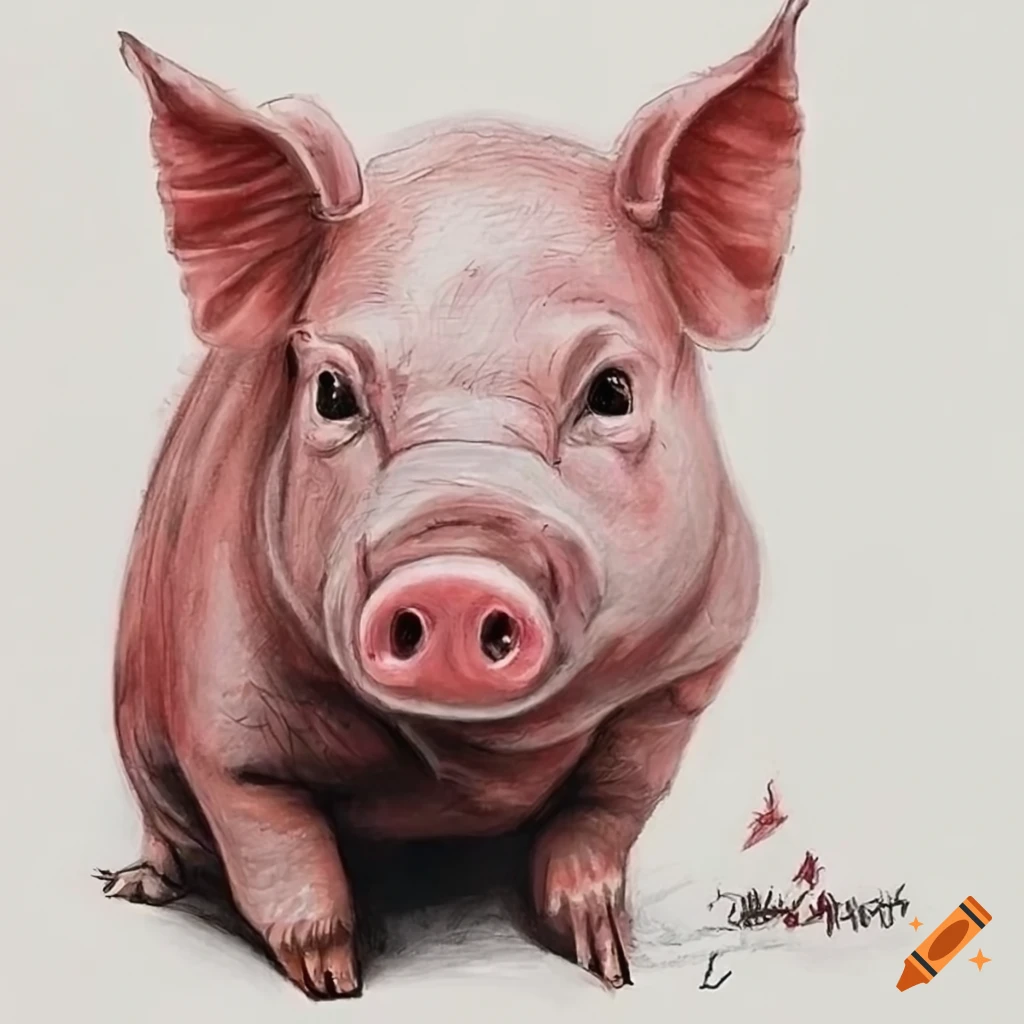
Textures and patterns play an important function in creating a sensible and fascinating illustration of a pig. By incorporating these parts, you’ll be able to add depth and visible curiosity to your paintings, making it extra immersive and plausible. On this part, we’ll discover the totally different textures and patterns discovered on a pig’s pores and skin, in addition to methods for creating them utilizing numerous drawing instruments and mediums.
Various Textures and Patterns
Pig pores and skin is characterised by a singular mixture of textures and patterns that change relying on the person animal and its atmosphere. A few of the most distinguished textures and patterns discovered on a pig’s pores and skin embrace scales, bristles, and hair.
- Scales: Scales are small, overlapping plates that present safety and assist to manage physique temperature. They’re usually discovered on the again and sides of a pig, and may be clean or bumpy in texture.
- Bristles: Bristles are coarse, hair-like growths that cowl the stomach and sides of a pig. They are often stiff or versatile, and assist to detect vibrations and actions within the atmosphere.
- Hair: Hair is coarse, stiff growths that cowl the top, neck, and tail of a pig. It may be longer or shorter in size, relying on the person animal and its breed.
These textures and patterns not solely improve the visible attraction of an illustration, but additionally present essential organic and behavioral details about the topic animal.
When drawing a pig, pay shut consideration to the textures and patterns on its pores and skin. These options can vastly affect the general realism and believability of the paintings.
Creating Textures and Patterns
To create life like textures and patterns on a pig’s pores and skin, you will want to make use of quite a lot of drawing instruments and methods. Some efficient strategies embrace:
- Mixing mediums: Mix various kinds of paint or ink to create refined, nuanced textures that mimic the appear and feel of actual pores and skin.
- Hatching and cross-hatching: Use a spread of traces and shading to create detailed, dimensional textures that add depth and visible curiosity to an illustration.
- Dotting and stippling: Create patterns and textures utilizing small dots or stippling methods to realize a way of texture and dimension.
By experimenting with totally different instruments and methods, you’ll be able to create a variety of textures and patterns that deliver your pig illustration to life.
Texturing in Life like Pig Illustrations
When illustrating a pig in a sensible setting, it is important to think about the textures and patterns discovered on its pores and skin. Some environments the place texture and sample come into play embrace:
- Muddy pens: A muddy pen is a basic atmosphere for pigs, with its damp soil and water-filled trenches. Pig pores and skin on this atmosphere can be mottled with mud and watermarks, making a textured look.
- Forest glades: A forest glade is a extra pure atmosphere for pigs, with its lush vegetation and tree cowl. Pig pores and skin on this atmosphere can be coated in leaves, twigs, and different particles, making a textured look.
By contemplating the environmental context of your pig illustration, you’ll be able to create a extra life like and fascinating paintings that showcases the intricate textures and patterns discovered on a pig’s pores and skin.
Closing Abstract
As you conclude our journey on how to attract a pig, bear in mind to observe and hone your abilities to grasp the artwork of making lovely and life like pig illustrations. With persistence and dedication, you can seize the essence of those lovable creatures and create breathtaking items of artwork that may go away everybody mesmerized.
Detailed FAQs: How To Draw A Pig
Q: What are the important instruments wanted to attract a pig?
A: To attract a pig, you will want a pencil, eraser, paper, and quite a lot of drawing instruments, reminiscent of markers, coloured pencils, or paints.
Q: Can I draw a pig with a unique breed or kind?
A: Sure, you’ll be able to draw a pig with a unique breed or kind by researching and learning its distinctive traits, reminiscent of measurement, form, and colour.
Q: How do I create a sensible texture for a pig’s fur?
A: To create a sensible texture for a pig’s fur, use quick, light strokes with a pencil or a specialised texture software, reminiscent of a stump or a mixing software.
Q: Can I draw a pig with a number of poses or scenes?
A: Sure, you’ll be able to draw a pig with a number of poses or scenes by training and mastering totally different drawing methods, reminiscent of perspective and composition.

