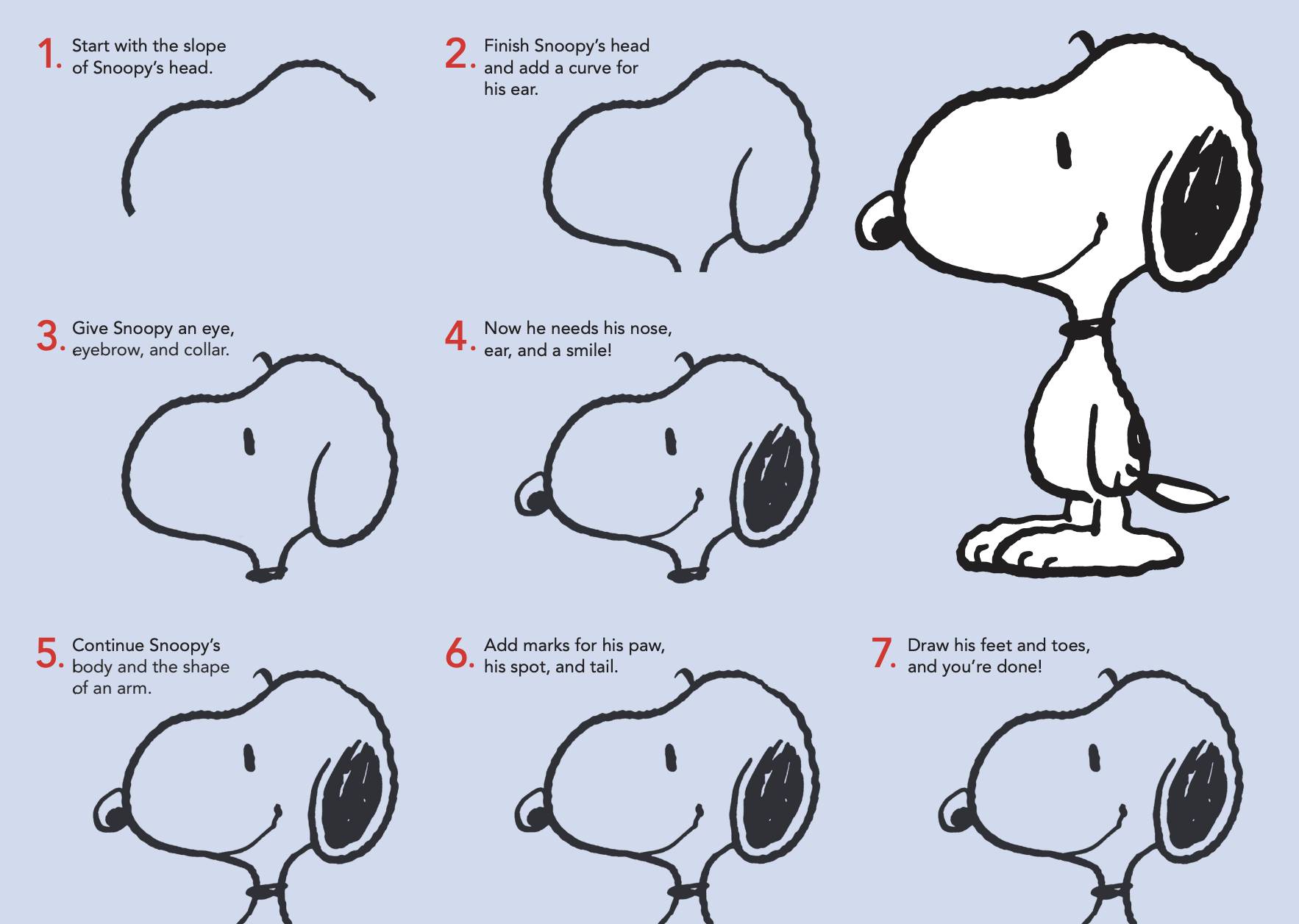
Kicking off with how to attract Snoopy, this complete information is designed to captivate and have interaction artists of all ranges, setting the tone for an in depth exploration of the beloved Peanuts character’s anatomy, facial expressions, and character. To grasp the artwork of drawing Snoopy, one should first perceive the distinctive options that make him immediately recognizable.
This information will stroll you thru the method of drawing Snoopy’s face, physique, and world, highlighting the important strategies and components that deliver this iconic character to life.
Understanding the Anatomy of Snoopy
Snoopy, the beloved canine companion of Charlie Brown, has a particular and iconic look that has captivated audiences for generations. Charles M. Schulz, the creator of the Peanuts cartoon, rigorously crafted Snoopy’s look to make him immediately recognizable.
Distinctive Options of Snoopy’s Face
Snoopy’s face is one in every of his most recognizable options. His massive, expressive eyes are almond-shaped, with the higher lid barely curved to provide him a perpetually stunned or curious look. His nostril is small and button-like, whereas his mouth is a skinny, straight line that means a stoic, even bemused, demeanor. His ears are triangular in form, with a particular tuft of fur on the prime that offers him a considerably eccentric look.
Distinctive Options of Snoopy’s Physique
Snoopy’s physique can be extremely distinctive, with a modern, elongated form that belies his wild creativeness. He has an extended, skinny torso, with quick legs and a tail that’s often depicted as curly or straight, relying on his temper. His fur is a wealthy, darkish brown colour, with a particular sheen that offers him a wholesome, vibrant look.
Detailed Dialogue of Charles M. Schulz’s Design Decisions
Charles M. Schulz’s determination to create a canine as the principle companion of Charlie Brown was a deliberate alternative, meant to convey the concept that a canine is a loyal, reliable buddy. By making a canine with such a novel and expressive face, Schulz was capable of convey a variety of feelings and personalities by Snoopy’s physique language and facial expressions. The distinctive form of Snoopy’s ears and nostril have been meant to emphasise his sensitivity and creativeness, whereas his skinny, straight mouth was meant to counsel a way of stoicism and calm.
Schulz’s determination to make Snoopy a world traveler, with a wealthy and different creativeness, was additionally a deliberate alternative, meant to convey the concept that even essentially the most ordinary-seeming creature can have extraordinary adventures and experiences. By making a canine that’s each extraordinary and extraordinary, Schulz was capable of faucet into the creativeness of his readers, inviting them to see the world from a brand new and infrequently stunning perspective.
Capturing Snoopy’s Physique Proportions
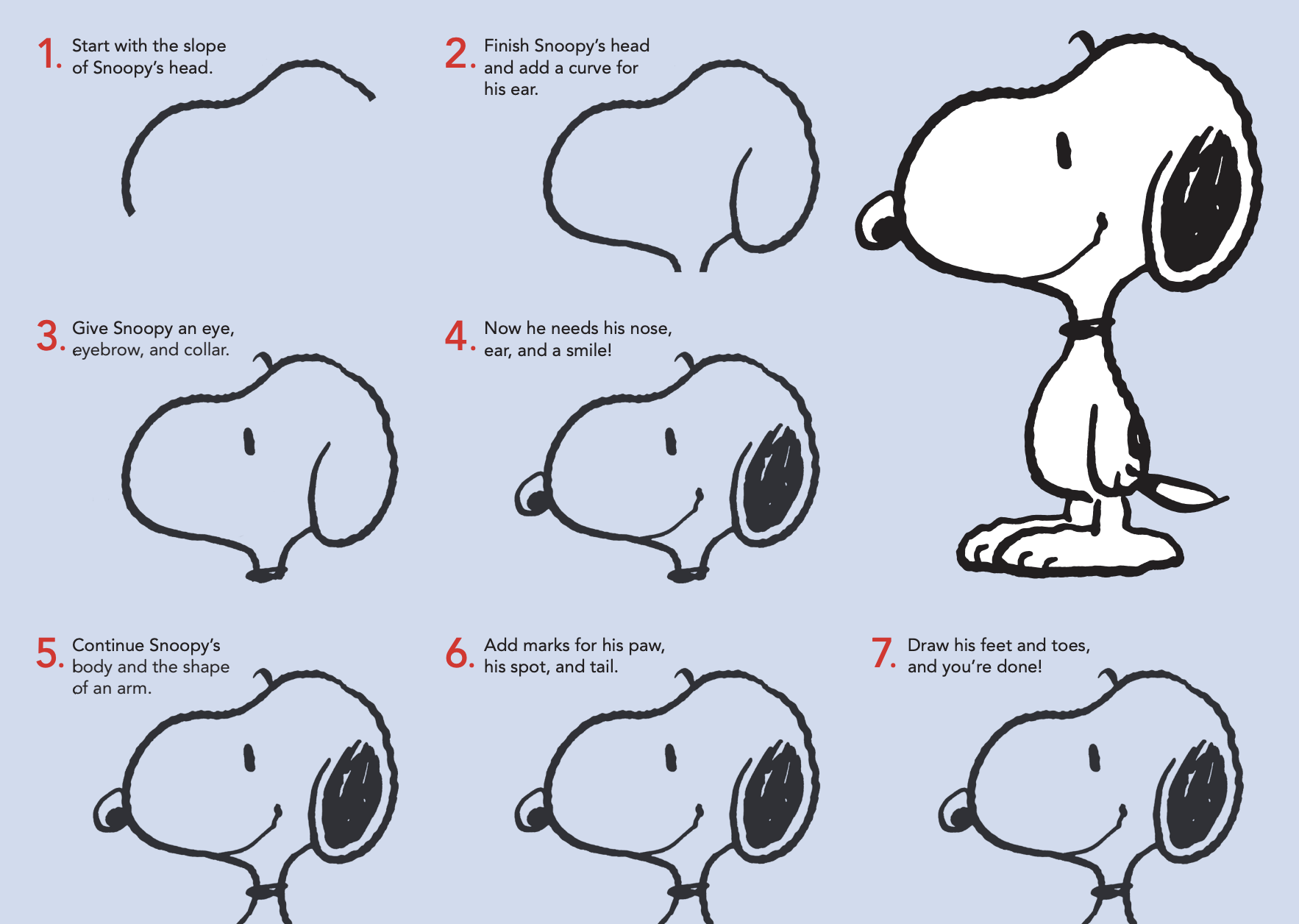
When drawing Snoopy, his physique proportions needs to be rigorously thought of to make sure a balanced and harmonious look. Snoopy’s physique proportions are a key facet of his lovable and iconic design. A well-proportioned physique will assist to deliver your illustration of Snoopy to life and make him immediately recognizable.
Snoopy’s physique is usually depicted as a bit longer than it’s tall, along with his torso being roughly 3 times the size of his head. His legs are barely longer than his physique, which permits them to splay out to the perimeters when he’s sitting. His tail is lengthy and fluffy, and is usually used to specific his feelings.
Torso Size and Proportion
The size of Snoopy’s torso needs to be roughly 3-4 occasions the size of his head. This can assist to create a way of stability and proportion in your illustration. When drawing Snoopy’s torso, remember to preserve it comparatively lengthy and lean, with a refined tapering on the waist. This can assist to create a way of depth and dimension in your illustration.
Drawing Snoopy’s Legs
Snoopy’s legs needs to be barely longer than his physique, which permits them to splay out to the perimeters when he’s sitting. When drawing Snoopy’s legs, remember to preserve them comparatively slender and muscular, with an outlined joint on the hip and knee. The entrance paws needs to be barely bigger than the again paws, which is able to assist to create a way of stability in your illustration.
Tail Proportions, How to attract snoopy
Snoopy’s tail needs to be lengthy and fluffy, with a rounded tip. When drawing Snoopy’s tail, remember to preserve it comparatively skinny and versatile, with a refined tapering on the finish. This can assist to create a way of motion and vitality in your illustration. The tail needs to be lengthy sufficient to succeed in the bottom, however not so lengthy that it turns into unwieldy.
Illustrating Snoopy’s Character by Expressive Posture
Snoopy, the beloved beagle from the Peanuts cartoon, is a grasp of expressing his character by his posture and physique language. Charlie Brown’s trustworthy companion has a novel method of conveying his ideas, feelings, and moods by his expressive posture, making him an ideal instance of how to attract and animate a personality with distinct character.
To seize Snoopy’s character by posture, you should perceive that his physique language displays his interior state and the way he interacts along with his environment. As an example, when Snoopy is happy or pleased, he tends to face tall along with his ears up and his tail wagging, exuding confidence and enthusiasm. However, when he is feeling down or anxious, he usually slumps, tucks his tail, and covers his head along with his paw, conveying a way of disappointment and vulnerability.
Posture and Feelings
Snoopy’s posture can convey a variety of feelings, from happiness and pleasure to disappointment and nervousness.
When Snoopy is feeling harassed or overwhelmed, his posture turns into slumped, along with his ears drooping and his tail tucked between his legs. That is usually accompanied by a anxious or anxious expression on his face, as if he is making an attempt to return to phrases with a tough scenario. For instance, when Snoopy is anxious about Charlie Brown’s well-being or anxious a couple of potential menace, his posture turns into extra subdued, reflecting his interior turmoil.
Conversely, when Snoopy is feeling assured or proud, his posture turns into extra erect, along with his ears perked up and his tail held excessive. That is usually accompanied by a regal or dignified expression on his face, as if he is making an attempt to claim his dominance or exhibit his achievements. As an example, when Snoopy is in his World Battle I Flying Ace persona, his posture turns into extra dramatic and heroic, reflecting his braveness and bravado within the face of adversity.
Posture in Totally different Situations
Snoopy’s posture also can mirror his temper and feelings in numerous eventualities, from enjoyable to enjoying.
When Snoopy is enjoyable or sleeping, his posture turns into extra relaxed, along with his ears drooping and his tail resting on the bottom. That is usually accompanied by a contented or peaceable expression on his face, as if he is having fun with a well-deserved relaxation after a busy day. For instance, when Snoopy is sleeping on prime of his doghouse, his posture turns into extra limp, reflecting his relaxed state.
Conversely, when Snoopy is enjoying or engaged in a stimulating exercise, his posture turns into extra dynamic, along with his ears perked up and his tail wagging excitedly. That is usually accompanied by a playful or mischievous expression on his face, as if he is having fun with the fun of the second. As an example, when Snoopy is enjoying fetch with Charlie Brown, his posture turns into extra energetic, reflecting his enthusiasm and love for enjoying along with his finest buddy.
Bringing Snoopy to Life with Shading and Texture: How To Draw Snoopy
Shading and texture are important components in bringing Snoopy to life, as they add depth and dimension to the drawing, making it extra visually interesting. By incorporating completely different shading and texture strategies, artists can create a variety of lighting results and moods, immersing the viewer on the planet of Snoopy.
Understanding the Significance of Shading in Snoopy’s Anatomy
Shading performs an important function in making a three-dimensional look of Snoopy’s physique. By making use of completely different shading strategies, artists can counsel the presence of muscle, fats, and texture, giving Snoopy a extra lifelike and lifelike look. As an example, mild shading can be utilized to depict delicate options, comparable to Snoopy’s facial expressions or the fragile folds of his ears.
- Use gradual transitions between gentle and darkish areas to create a way of softness and subtlety, good for Snoopy’s fluffy fur.
- Make use of harsher shading strategies to emphasise Snoopy’s sturdy physique and energetic character.
- Create texture and sample variations in Snoopy’s fur by utilizing completely different shading strategies, comparable to cross-hatching or stippling.
Utilizing Texture to Seize Snoopy’s Character
Texture is an important facet of Snoopy’s identification, reflecting his curious and adventurous nature. By using a wide range of texture strategies, artists can convey Snoopy’s feelings and traits, making him a extra relatable and fascinating character.
- Use unfastened, expressive strokes to seize Snoopy’s enthusiastic and playful character, good for illustrating his wild adventures.
- Make use of easy, delicate strokes to depict Snoopy’s extra introspective moments, highlighting his contemplative aspect.
- Use textured, layered patterns to convey Snoopy’s resourceful and artistic nature, revealing his capacity to adapt to any scenario.
Creating Temper and Environment by Shading and Texture
By combining shading and texture strategies, artists can create a wealthy emotional panorama, drawing the viewer into Snoopy’s world. Totally different lighting results and moods could be achieved by manipulating the shading and texture, reflecting Snoopy’s dynamic character.
- Darkish, dramatic shading can create a moody environment, good for depicting Snoopy’s extra melancholic moments, like when he is misplaced his beloved toys.
- Gentle, heat lighting can evoke a way of coziness and safety, reflecting Snoopy’s affectionate and constant nature.
- Excessive-contrast shading can add an charisma and drama, highlighting Snoopy’s extra adventurous and daring exploits.
Mixing Shading and Texture for a Real looking Snoopy
By combining a number of shading and texture strategies, artists can obtain a very lifelike illustration of Snoopy. By balancing delicate and expressive strokes, comfortable and harsh shading, and refined and dramatic lighting results, artists can create a Snoopy that is each visually fascinating and emotionally partaking.
- Combine unfastened, expressive strokes with easy, delicate strains to seize Snoopy’s dynamic and adaptable character.
- Ambiguously shade Snoopy’s fur by combining harsh and comfortable textures, capturing his multifaceted nature.
- Mix contrasting shading strategies, like hatching and cross-hatching, to create Snoopy’s different textures and expressive options.
Epilogue
In conclusion, drawing Snoopy requires a deep understanding of his anatomy, facial expressions, and character. By mastering these key components, artists can unlock the secrets and techniques of making a lovable and relatable character that may captivate audiences of all ages.
With this information, you now have the instruments and information to deliver Snoopy to life on paper, and to share his adventures and pleasure with the world.
Important Questionnaire
Q: What’s one of the best ways to attract Snoopy’s face?
A: To attract Snoopy’s face, deal with capturing his distinctive options, together with his massive, spherical eyes, small nostril, and expressive mouth.
Q: How do I obtain a balanced and harmonious look when drawing Snoopy’s physique?
A: To attain a balanced look, be certain that Snoopy’s physique is in proportion to his face. Use reference pictures that can assist you decide the best proportions for his torso, legs, and tail.
Q: What are some ideas for drawing Snoopy’s character by expressive posture?
A: To attract Snoopy’s character by his posture, deal with capturing his assured and expressive stance. Use visible cues, comparable to his tail and ears, to convey his feelings and temper.
Q: How do I create a well-designed background for Snoopy’s world?
A: To create a well-designed background, deal with utilizing colours, textures, and shapes that improve the storytelling and setting of the scene. Contemplate the temper and environment of the story when selecting the background components.
Q: What are some strategies for including shading and texture to Snoopy’s drawing?
A: So as to add shading and texture, use a variety of strategies, together with layering, mixing, and hatching. Experiment with completely different instruments and supplies to realize the specified impact.

